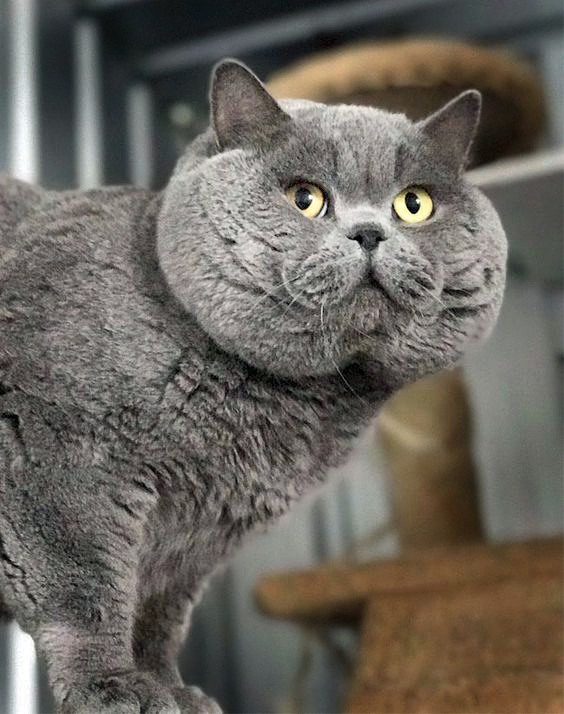
British Shorthair Toronto Why So Expensive
For a professional breeder, running a cattery becomes a life's work that absorbs all free time and energy. Many still balance breeding with a regular full-time career. While it is demanding work requiring significant financial and physical investment, breeders themselves view it primarily as a serious hobby.
If you operate professionally - adhering strictly to sanitary, veterinary, and zootechnical standards while maintaining the integrity of the breed - it is impossible to turn a large profit.
A major component of a kitten's price is the cattery's level of expertise. Even if this cannot be physically measured, standard market economic principles apply wherever price, cost, and value exist.
To establish a cattery properly, a breeder must possess fundamental knowledge of veterinary medicine, genetics, and felinology. This requires completing specialized courses and studying technical literature. The cattery must also be officially registered within a recognized felinological registry, which involves initial entry and annual membership fees.
A legitimate breeder works from a defined breeding program outlining the specific goals and direction for the breed. To achieve these goals, foundation stock is chosen with great care.
The objective of a cattery is not mass sales, but the refinement of breed type and the development of rare traits or coat colors. A breeder must know the official standard in detail; without this, it is mere propagation rather than selective breeding. If you do not know the standard, you cannot identify flaws or plan improvements. Every animal has minor imperfections, meaning selective work is continuous.
Each cattery aims to develop a distinct, recognizable type. Experienced international judges can often identify a cattery's line by head structure, ear set, or eye shape. This signature quality is highly valued. Consequently, the best specimens are retained for the breeding program, while others are placed in suitable homes.
A primary driver of cost is the kitten's breeding quality, determined by its phenotype and genotype:
Show Class: Animals that conform exceptionally well to the breed standard, with excellent pedigrees. They are eligible for competitive exhibition and selective breeding. These kittens carry the highest price.
Breed Class: Animals suitable primarily for breeding programs. While they may have minor structural imperfections that limit top show placements, they carry valuable bloodlines or traits. Show-class offspring often come from breed-class parents.
Pet Class: Cats intended strictly as companion animals. They have minor cosmetic deviations from the standard (such as slight variances in coat color, eye color, or ear set) that disqualify them from showing or breeding, though these nuances are usually noticeable only to a trained eye. These kittens sit in the lowest price category.
A kitten's final price reflects this classification. It is important to note that both Pet-class and Show-class animals can be sold under non-breeding (spay/neuter) agreements, and a Show-class alter will still cost significantly more than a standard Pet-class alter due to its higher overall conformation quality. A high-quality purebred animal cannot be cheap, regardless of its intended role. There is a simple rule: every reputable breeder understands the precise value of their kittens.
The genotype represents the kitten's ancestral background and bloodlines. The overall price is closely tied to pedigree depth and genetics, making careful review of ancestral lines essential.
Rare or newly developed coat colors also carry higher costs. Achieving a rare color requires years of careful genetic calculation, time, and resources.
Another major expense is the acquisition of foundation breeding stock. Carefully planning pairings and evaluating genetic lines mirrors technical laboratory research. Quality females for breeding (breed class) typically start at $3000, while show-class females start around $5000. Breeding males require even stricter selection and command starting prices of $8000 or more. Catteries often import animals from abroad to secure specific bloodlines, adding substantial transportation and import costs.
Daily maintenance and care represent another ongoing investment:
Nutrition and Housing: Premium specialized food (including raw or fresh meat), proper environmental equipment, and hygiene supplies.
Veterinary Care: Routine and emergency medical costs. Kittens require a double course of vaccinations between 8 and 12 weeks of age, while adult cats need annual boosters. Other recurring expenses include microchipping, diagnostic screening, deworming, and potential emergency interventions such as Caesarean sections.
Exhibitions: Responsible breeders actively show their cats to validate their quality under independent judges. Local shows average $2500 to $3000 per animal when factoring in travel, lodging, and entry fees; international shows cost substantially more. Achieving higher championship titles requires attending at least 10 shows, with no guarantee of winning against top competition.
Marketing and Administration: Maintaining a website, photography, advertising, and administrative documentation.
Labor: Daily care, socialization, cleaning, feeding, and medical monitoring are equivalent to a full-time commitment without time off.
These expenses repeat continuously: acquiring new stock, financing show careers, raising litters, and replacing worn equipment. Income from kitten sales rarely offsets total operational costs. For instance, Abyssinian cats have small litters (averaging 2-3 kittens) and are bred no more than three times in two years. Breeding cats work for only 5-6 years, after which the breeder provides for their retirement for the rest of their lives.